Key points
- NAP stands for name, address and phone number. Citations are places online that list them.
- Consistent details still matter, mainly because customers, Google and AI tools need to trust them.
- A handful of important listings matter far more than hundreds of tiny directories.
- Fix wrong information first, then add quality listings, then move on to reviews and content.
If you have spent any time around local SEO, you have heard the advice: “Make sure your NAP is consistent and build citations.” Agencies sell citation packages with hundreds of directory listings. But is this still worth your time and money in 2026?
The honest answer: consistency still matters, but the volume game mostly does not. This guide explains what citations are, why they matter, and how to handle them without wasting a weekend or a budget.
What NAP and citations mean
NAP is your business name, address and phone number. A citation is any place online that mentions them: Google, Apple Maps, Bing, Yelp, Facebook, industry directories, your chamber of commerce, local news sites and more.
Some citations include a link to your website, many do not. Both kinds help confirm that your business exists and where it is.
Why consistency still matters
Search engines and AI tools gather information about your business from many sources. When they all agree, they can trust the details. When they conflict, such as an old address on one site or a disconnected phone number on another, they have to guess.
The biggest cost of inconsistent details is often not rankings but lost customers. Someone who finds your old phone number on a directory and gets no answer does not search again. They call a competitor.
It also matters for AI search. Assistants like ChatGPT and Gemini cross-check businesses across sources before recommending them. We explain this in our guide to AI search for local businesses.
Why the volume game is mostly over
Years ago, appearing on hundreds of directories gave a noticeable boost. Today, Google relies far more on your Business Profile, your website, reviews and genuine mentions. Most small directories get almost no visitors, and many of them copy data from each other.
Google’s own local ranking guidance focuses on relevance, distance and prominence. Being listed in the right places supports prominence, but there is no reward for listings nobody uses.
The listings that matter most
For most local businesses in the United States, these are the core listings to get right:
- Google Business Profile, the most important by far.
- Apple Business Connect, which feeds Apple Maps and Siri.
- Bing Places, which also feeds some AI and voice tools.
- Yelp and Facebook, which customers actually use.
- Your industry’s main directories, such as the state bar for lawyers, healthcare directories for clinics, or trade associations for contractors.
- Local sources: your chamber of commerce, business improvement district or city directory.
A simple four-step cleanup
1. Decide on your official details
Write down your business name, address and phone exactly as you want them to appear everywhere, including suite numbers and abbreviations. Match what is on your sign, your website and your Google profile, which should follow Google’s guidelines.
2. Find what is wrong
Search Google for your business name, your phone number and your old address if you have moved. Note every listing with outdated or incorrect details, especially on the core sites above.
3. Fix the important ones
Claim and correct your core listings first. Many sites let you claim your listing for free and edit it directly. For smaller sites, a correction request is usually enough. Do not worry about every obscure directory.
4. Add a few quality listings
Once your core details are right, add listings where customers or your industry really look. Then stop. Your time is better spent on reviews, your website and your Google profile.
Do not forget your own website
Your website is the most important citation you control. Put your name, address and phone in the footer of every page, add a clear contact page, and consider adding LocalBusiness structured data, which helps search engines read your details correctly. Many SEO plugins can add it with a few clicks.
How to know it is working
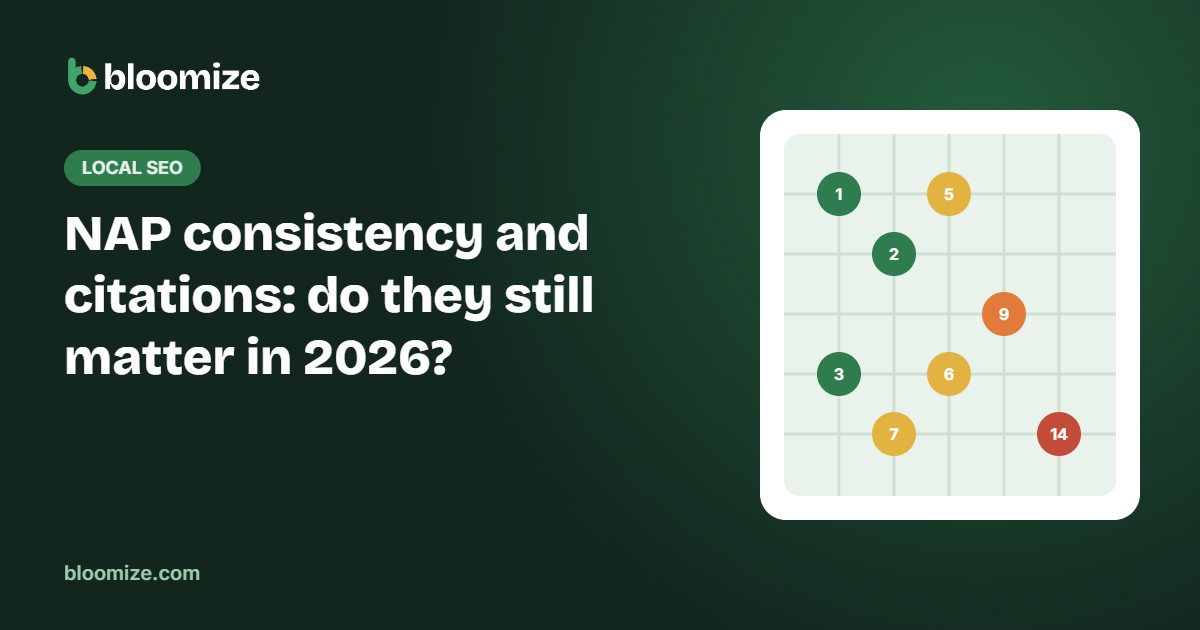
Citation work rarely produces a dramatic jump on its own. Watch for steadier signals over a few months: fewer wrong-number calls, more direction requests and calls from your Business Profile, and a more even Maps rank grid across your area.
The bottom line: get your details right in the places that matter, then put your energy into the things that move the needle most. Our Business Profile checklist is a good place to start.